Niger State Kidnapping: The Ruling Class Cannot Help
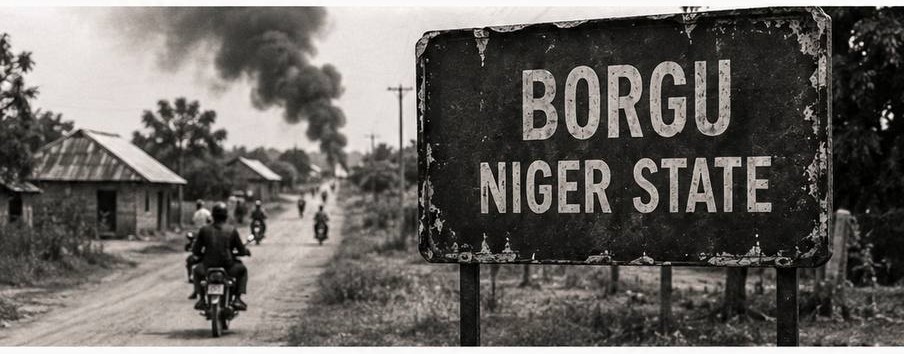
On Friday 21 August, armed men entered the mosques of Dekara, Kpenya, Sabon-Gida and Gidan-Zana in Borgu, Niger State, during the Juma’at prayer, shot down worshippers and drove the rest into the forest at gunpoint. The Borgu council chairman put the dead at around 30 and the abducted at more than 60, after the police had first assured the country that no lives were lost. Days later the gunmen released their own video which showed the number ran into the hundreds. Whole communities have since fled towards the Benin Republic border.
This is another bloody exposure of the Nigeria in which working people live: a country where peasants, workers, women, children and the elderly are left defenceless in the villages. For the labouring peasants this is the real face of insecurity, a permanent possibility that in an instant they may end up murdered or abducted.
An “Immediate” Order After the Abduction
On 25 August, 4 days after the attack, President Tinubu directed the armed forces, the police and the DSS to launch an “immediate” rescue and told the service chiefs to brief him until every captive was accounted for. He called the attackers enemies of humanity who would not go unpunished, and declared that “terror will not cow Nigeria.” But the President had already ordered this fix. On 5 August the presidency celebrated the rescue of 308 people abducted in Niger and Kwara as the largest single-day operation ever mounted by the joint forces. He also directed the security agencies to strengthen early warning systems, deepen community intelligence and sharpen rapid response so that mass abductions would be forestalled across the country. However, the gunmen walked into Borgu 16 days later.
The ordinary Nigerians are witnessing this same pattern of security crises repeated again and again, and are learning the lessons that an “immediate” order is not proof of strength but an admission that the state has once more failed to protect the people. What must be exposed is that the State and its ruling class do not organise protection around the everyday needs of workers and peasants but intervenes only when the scale of suffering threatens its authority and legitimacy.
The Class Division of Security Provision
Kidnapping in Nigeria has become an industry, with intelligence reports showing that over 7,825 people were abducted between July 2025 and June 2026, a rise of 66% in a single year, that at least 1,142 were killed, and that ₦7.78 billion, about $5.79 million, was paid in ransom, more than three times the sum of the year before. These figures are conservative, since most ransoms are paid in secret. Under this order a human being becomes a commodity. The people being kidnapped are the ordinary Nigerians, and their families, already crushed by rising cost of living, must sell land or empty their savings to buy back their own. Across the northwest and the central belt, the armed gangs are drawn in large part from herders ruined by the collapse of their livelihoods and the wars over shrinking land and water.
Banditry flourishes as a business because the Nigerian society is organised around private profit and the abandonment of the poor. Three years after Tinubu took office promising to end insecurity, the trade is bigger than it has ever been. The rich, however, buy their security in the open market, behind walls and armed escorts. That difference expresses the design of the state itself, which finds resources for political convoys and elite protection while the villages are left without roads, communications, clinics or any security presence worthwhile.
We must be done with the moralism the ruling class presses on us, the notion that this crisis reduces to the wickedness of the kidnappers. Certainly, the kidnappers are reactionary criminals, and they must be defeated but that explains nothing about why kidnapping has become a permanent feature of Nigerian life. To answer that, the crisis must be located in the political economy of a capitalist society marked by mass poverty, rural abandonment, unemployment and extreme inequality.
That is what makes the crisis a symptom of capitalism in its Nigerian, dependent and crisis-ridden form. This is an economic order in which its people are valued mainly as cheap labour, voters, consumers and sources of raw materials, rather than as citizens entitled to a secure and dignified life. A government that celebrates individual rescues while the ransom economy expands is not defeating the crisis but administering its consequences. That is the class character of this crisis.
No More Mourning Without Organisation
The people of Borgu and Niger State are not begging for pity; they are entitled to protection, dignity and a life free from fear. The capitalist state is no neutral guardian standing above society but exists in a society divided by class, and it protects that unequal order. What is urgently needed is the independent organisation and action of the working class itself.
The Naija Marxists Demands:
i. Immediate, fully resourced efforts to rescue every abducted person alive and safely.
ii. Public, transparent accounting for the security failures that left affected communities exposed.
iii. Material compensation, trauma support, housing, healthcare and livelihood support for affected families and communities.
iv. Major public investment in roads, communications, clinics, schools and democratic community-based protection in rural areas.
v. Working-class scrutiny of the security budgets and agencies by the trade unions and by community representatives who answer to the people.
The dead deserve more than condolences, the abducted more than hashtags, and the people of Niger State more than another performance of official outrage. The answer is not faith in stronger words from our ruling class, but mass democratic pressure from the workers. Our safety, and our power over the conditions of our own lives, depends on us building our own revolutionary political organisation, independent of the parties of the ruling class. History demands it of us.